Hospital Industry Grows More Competitive: System Transformation Is the Key to Survival
By: Ihfa Firdausya · 2026-04-22
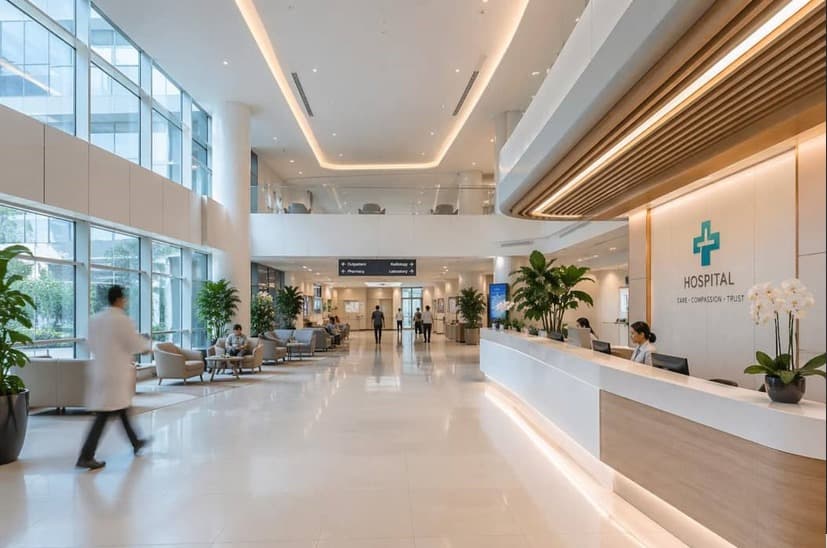
Amid the ever-evolving healthcare industry, hospitals in Indonesia face increasingly complex challenges. They are not only required to deliver quality medical services, but also to maintain operational sustainability amid cost pressures, competition, and regulatory changes.
Behind impressive buildings and services that appear to run smoothly, many healthcare institutions face structural challenges that are not always visible on the surface.
Over-reliance on a handful of key doctors, non-standardized operational systems, and ever-increasing funding needs are recurring problems. Many hospitals have grown "naturally" — evolving over time without a truly solid systemic foundation.
As a result, operations continue to run, but they are difficult to measure and control. Performance may appear stable, yet it is vulnerable when pressure arrives. In many cases, organizations rely more on individuals than on robust systems.
From Surviving to Transforming
This is the point at which many healthcare institutions begin to realize that mere survival is not enough. Transformation has become an unavoidable necessity. Yet the greatest challenge lies not in designing a strategy, but in executing it. This is where MEDIVARA Healthcare Consulting becomes relevant — not merely as a consultant, but as an execution partner directly involved in the transformation process, ensuring that change does not stop on paper.
"Strategy is easy to create. The hard part is making sure that strategy actually happens on the ground — and that is where we work," said Rima Fatmasari, Lead Advisor for Clinical Operations & Governance Excellence at MEDIVARA. The approach MEDIVARA brings emphasizes one fundamental principle: transformation will only succeed if supported by strong systems and disciplined execution.
Building a Sustainable System
Building on this principle, MEDIVARA integrates various critical aspects of hospital organization into a single structured framework — spanning governance, clinical operations, and human resource development.
The focus is not merely on fixing what appears to be broken, but on building a foundation capable of maintaining quality consistently over the long term. This is achieved through the development of a clear and accountable organizational structure, the establishment of standardized operational processes that reduce dependence on specific individuals, and simultaneous efforts to optimize both service performance and financial outcomes. At the same time, MEDIVARA drives the formation of a collaborative, patient-centered work culture, so that change occurs not only in systems but also in how teams work within the organization.
"Many hospitals want to change, but they stop at the planning stage. The real challenge is execution. That is where we come in — ensuring that transformation actually takes place and delivers impact," Rima added.
Case Study: Measurable Transformation
This approach is reflected in the transformation of Dharma Nugraha Hospital, an institution with a long history in oncology. Prior to the transformation, the hospital faced challenges in operational consistency and inter-unit coordination. Non-standardized systems made performance difficult to manage comprehensively, while dependence on key individuals was considerable.
The transformation was focused on a comprehensive overhaul of systems. "Transformation is not about fixing what is broken — it is about building a system that makes the organization no longer easily broken" became the guiding principle of the process.
Within less than a year of MEDIVARA's involvement, changes began to show. Operational systems became more structured, management stronger, and service quality improved. The impact extended beyond internal efficiency to patient experience and public perception.
"MEDIVARA did not just provide guidance — they truly walked alongside us throughout this transformation. The changes that occurred were not just on paper; we felt them in our systems, our team, and in patient trust," said Sekar Dewi Dinawati Tjindarbumi, Director and Owner of Dharma Nugraha Hospital.
Addressing the Healthcare Industry Challenge
This transformation demonstrates that the core challenge for many healthcare institutions lies not in a lack of potential, but in the absence of strong systems and consistent execution. Amid increasingly complex industry dynamics — from accreditation requirements and cost efficiency to ever-rising patient expectations — hospitals are required to adapt comprehensively, not partially.
Going forward, the institutions that will survive and thrive will not simply be those with the best facilities, but those with a solid organizational foundation, systems that operate consistently, and the ability to execute strategies with discipline across every level of operations.
Real Transformation
Ultimately, transformation in the healthcare sector is not merely about changing appearances or adding facilities. More than that, it is about building an organization that is resilient under pressure and capable of delivering consistent care. In this context, MEDIVARA's role as an implementation partner becomes increasingly important — not only in charting the direction of change, but in ensuring that change truly happens.
Because amid the complexity of today's healthcare industry, transformation is no longer a choice — it is a necessity. Not merely to survive, but to remain relevant and sustainable.